Retatrutide vs Semaglutide: What's the Difference? | New Zealand Peptides
Retatrutide vs Semaglutide are both GLP-1 related research peptides — but they work very differently. Here's a clear breakdown for researchers, take 3 minutes to read.
/blog/retatrutide-vs-semaglutide
3/20/20262 min read
Retatrutide vs Semaglutide: What's the Difference?
If you've been following peptide research over the last few years, you'll have come across both retatrutide and semaglutide. They're often mentioned in the same breath — both involve GLP-1 receptor activity, both have attracted significant research interest in metabolic science, and both are available as lyophilized research compounds.
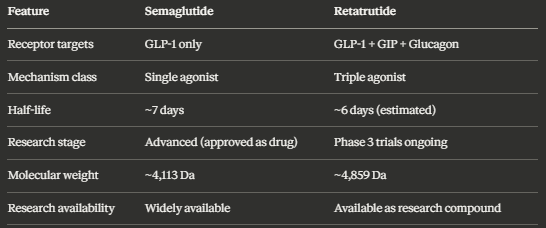
But they are meaningfully different. Here's a clear comparison for researchers who want to understand what sets them apart.
The Core Difference: Receptor Targets
This is the most fundamental distinction between the two compounds.
Semaglutide is a GLP-1 receptor agonist. It targets a single receptor pathway — the glucagon-like peptide-1 receptor. It is a well-studied compound with a long half-life due to its albumin-binding fatty acid chain modification.
Retatrutide is a triple receptor agonist. It targets GLP-1, GIP, and glucagon receptors simultaneously. This multi-receptor approach is newer in research and represents a different mechanistic hypothesis about how to study metabolic regulation.
GLP-1: The Shared Pathway
Both compounds engage the GLP-1 receptor, which is the most studied pathway in this space. GLP-1 receptor agonism has been investigated extensively in relation to appetite signalling, glucose metabolism, and gastric motility. The overlap here means some research findings with semaglutide are considered relevant reference points when designing studies with retatrutide — though the additional receptor activity makes direct comparisons complex.
What the GIP Pathway Adds
Retatrutide's GIP receptor activity is one area of distinct research interest. GIP (glucose-dependent insulinotropic polypeptide) works in concert with GLP-1 in metabolic processes. Some research hypothesises that combined GLP-1 and GIP agonism may produce additive or synergistic effects in energy regulation, though research in this area is still evolving.
Semaglutide does not engage the GIP receptor.
The Glucagon Component
The glucagon receptor activation in retatrutide is arguably its most distinctive feature from a research perspective. Glucagon has traditionally been studied for its role in raising blood glucose, but at certain activity profiles it has also been associated with increased energy expenditure. Retatrutide's glucagon receptor activity is what makes it structurally and mechanistically distinct from both semaglutide and tirzepatide (which targets GLP-1 and GIP but not glucagon).
Which Is Right for Your Research?
That depends entirely on your research objectives. If your study focuses on GLP-1 receptor activity specifically, semaglutide is a well-characterised reference compound with extensive published literature. If your research involves exploring multi-receptor metabolic pathways or comparing triple-agonist mechanisms, retatrutide is the more relevant compound.
Both are available from New Zealand Peptides as high-purity lyophilized powder for research purposes.
This product is for research use only. Not for human or veterinary use. Always follow applicable regulations and research guidelines in your jurisdiction.